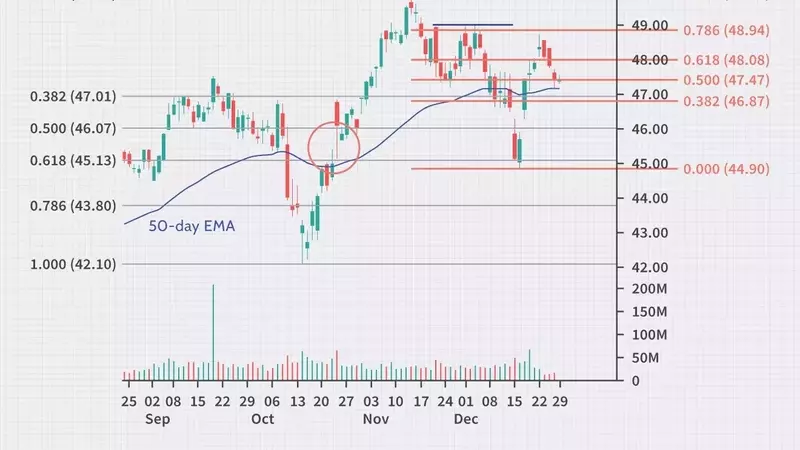

The United States equity market demonstrates remarkable endurance, with the S&P 500 consistently reaching peak valuations. This resilience extends beyond typical economic indicators, deeply rooted in fundamental structural elements. The ongoing bull market is fueled by a confluence of passive investment flows, steady contributions to 401(k) plans, and substantial corporate share repurchases, collectively forming a potent demand for stocks, especially those with large market capitalizations.
A significant driver of the market's ascent is the surge in passive investing. With a growing preference for index funds and exchange-traded funds (ETFs), capital is automatically allocated to stocks based on their market capitalization. This mechanism inherently favors larger companies, leading to a self-fulfilling prophecy where increased investment in these giants further inflates their value, attracting even more capital. This positive feedback loop amplifies market momentum, particularly for mega-cap firms that dominate major indices like the S&P 500.
Corporate buybacks represent another colossal force underpinning equity demand. Companies, flush with cash, are aggressively repurchasing their own shares. In the past year alone, these buybacks totaled an estimated $1.2 trillion, effectively reducing the supply of shares available in the market. This not only boosts earnings per share (EPS) but also directly supports stock prices, creating a structural demand that is largely independent of immediate market sentiment. This steady stream of corporate buying acts as a crucial safety net, mitigating potential downturns.
Furthermore, consumer spending, despite elevated household debt levels and a notable disparity in wealth, remains robust. This sustained consumer activity underpins corporate revenues and profits, providing a vital economic foundation for the stock market. While high debt and economic bifurcation could eventually pose risks, the current resilience in consumer behavior defers any immediate bearish inflection point, allowing the market to continue its upward trajectory. The interplay of these structural elements paints a picture of a market sustained by powerful, albeit unconventional, forces.
The persistent strength of the U.S. equity market is a testament to the intricate interplay of passive investment trends, massive corporate buybacks, and resilient consumer spending. These factors collectively create a unique and powerful dynamic, allowing the market to defy conventional headwinds and maintain its upward momentum. The market's current state is a complex blend of these powerful forces, pushing valuations to new heights.