Understanding bond quotes is crucial for investors navigating the fixed-income market. These quotes serve as snapshots of a bond's current market standing, offering critical details that influence investment decisions. By delving into the components of a bond quote, investors can gain clarity on a bond's value, its potential returns, and the risks involved. This knowledge empowers them to make informed choices, comparing various bonds effectively and strategically managing their portfolios.
Detailed Insights into Bond Quotes
A bond quote is essentially a financial report that displays the real-time market value of a bond. This value is typically presented as a percentage of its nominal or "par" value, which is commonly set at $1,000 for many bonds. For example, a bond quoted at 98 signifies it is trading at 98% of its $1,000 face value, equating to $980. Conversely, a quote of 102 indicates it is trading at $1,020. These figures are vital for understanding how market dynamics are influencing a bond's price.
The price of a bond is not static; it responds to a variety of factors. Fluctuations in prevailing interest rates, changes in the bond issuer's creditworthiness (reflected in its credit rating), and broader economic conditions can all impact a bond's market price. Investors monitor these changes through bond quotes to gauge the trajectory of prices and to decide whether to acquire, retain, or divest their bond holdings.
To illustrate how to interpret a bond quote, let's consider an example: "VZ40 - 101.25 - 3.892%, 06/30/28, 5%, AA."
- VZ40: This alphanumeric code is the bond's unique identifier, similar to a stock ticker.
- 101.25: This represents the bond's market price as a percentage of its face value. For a $1,000 face value bond, the price is $1,012.50 (1.0125 multiplied by $1,000).
- 3.892%: This is the bond's yield, typically the yield to maturity (YTM). YTM estimates the total annual return an investor can expect if the bond is held until its maturity date, assuming all payments are made as scheduled. Sometimes, a plus or minus sign may accompany the yield, indicating a slight variation from the stated percentage.
- 06/30/28: This is the maturity date, specifying when the bond's principal will be repaid to the investor. In this instance, the bond matures on June 30, 2028.
- 5%: This is the bond's coupon rate, the fixed annual interest rate paid by the issuer. This bond pays 5% of its face value in interest each year.
- AA: This is the bond's credit rating, assigned by agencies like Moody's, S&P, or Fitch. An "AA" rating signifies high credit quality with a slightly elevated risk compared to the top-tier "AAA" bonds. Higher ratings indicate lower risk of default. Bonds are broadly categorized into government (safest), investment-grade corporate/municipal, and high-yield or "junk" bonds (riskier).
From this detailed quote, an investor can understand that this particular bond is currently trading above its par value, offers a yield of 3.892% annually until its maturity in mid-2028, provides a 5% annual interest payment, and is considered to have a strong credit profile. An investor buying this bond at $1,012.50 would anticipate an annual yield of 3.892% over its remaining life.
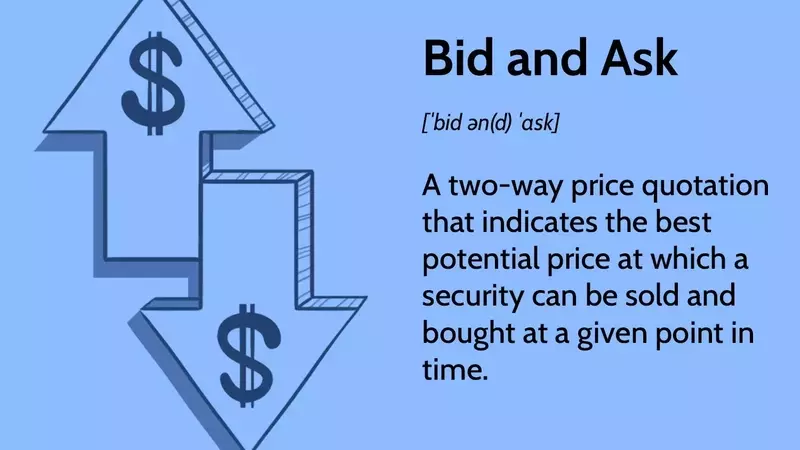
Beyond these core elements, bond quotes may also include bid and ask prices (representing the highest price a buyer is willing to pay and the lowest price a seller will accept, respectively) and a CUSIP number, a unique identifier for tracking and trading securities.
Bond quotes can vary in format: some are based on face value percentages (common for U.S. Treasury bonds), others on annual yield to maturity (typical for corporate and municipal bonds), and some may be expressed as a spread over a benchmark security (e.g., U.S. Treasuries) or simply as a pure dollar price (for bonds without standard face values, such as mortgage-backed securities). Each format provides a distinct perspective for evaluating a bond's worth.
The meticulous examination of bond quotes provides a comprehensive overview of a bond's characteristics, helping investors to effectively compare and select investments that align with their financial goals and risk tolerance.
As a news editor, I often encounter articles that simplify complex financial topics. This piece on bond quotes does an excellent job of breaking down what can be an intimidating subject for many investors. The structured explanation, from defining each component of a bond quote to detailing various quote types, makes it highly accessible. What stands out is the practical application of this knowledge, enabling investors to move beyond superficial understanding to making truly informed decisions. It emphasizes that while the financial world can seem arcane, with the right guidance, anyone can navigate its intricacies. The article serves as a powerful reminder that transparent, well-explained financial information is key to fostering a more confident and engaged investor community. The clear, concise language and logical flow ensure that readers, regardless of their prior experience, can grasp the fundamental principles of bond valuation.