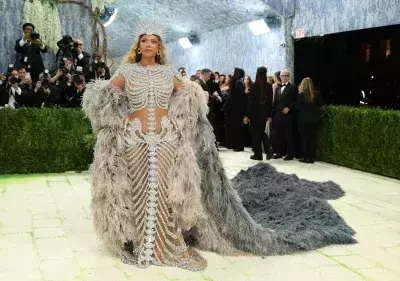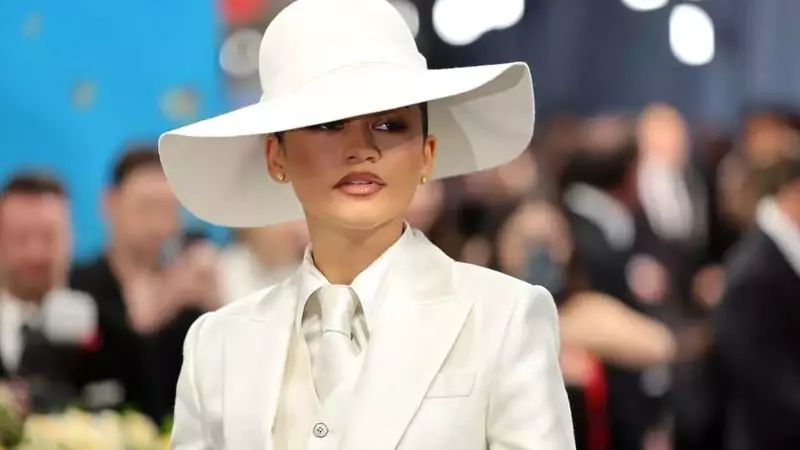

The 2026 Met Gala, themed 'Fashion Is Art', ignited discussions on the intersection of these two creative realms. While some attendees chose to embody classical artworks, leading to a spectacle of 'art cosplay', others ventured into a more nuanced interpretation, showcasing fashion's inherent artistic merit. This event underscored the fundamental differences between fashion as a functional, personal expression and art as a detached, revered object, prompting a re-evaluation of fashion's place in the artistic pantheon.
Met Gala 2026: An Evening of Artistic Interpretations and Fashion Statements
On the evening of May 5, 2026, the Metropolitan Museum of Art became a vibrant stage for the annual Met Gala, drawing attention to its intriguing dress code: 'Fashion Is Art'. This theme, initially perceived as a potential risk by fashion critics like Vanessa Friedman, challenged attendees to bridge the gap between sartorial expression and traditional artistic forms. The anticipation was palpable, as the gala has increasingly become a platform where celebrities strive for attention-grabbing ensembles, pushing the boundaries between elegance and the avant-garde.
Among the notable figures embracing the theme, Heidi Klum made a striking appearance, reminiscent of a living Greek or Roman sculpture, sparking playful comparisons to her famous Halloween costumes. Anne Hathaway graced the event in a Michael Kors creation adorned with a Grecian urn motif, a literal nod to classical art. Ben Platt's Tanner Fletcher suit featured scenes evoking Georges Seurat's iconic painting 'A Sunday Afternoon on the Island of La Grande Jatte', while Lauren Sánchez Bezos, alongside several others, channeled John Singer Sargent's 'Madame X' in a Schiaparelli design. Julianne Moore, Claire Foy, and Gwendoline Christie also drew inspiration from a painting displayed within the Met itself, appearing in Bottega Veneta, Erdem, and Giles Deacon respectively. These interpretations, while directly referencing established artworks, highlighted a common approach to the theme.
However, the event also served as a profound reminder of the subtle yet significant distinction between fashion and art. Traditional art, often admired from a distance and placed on a pedestal, functions as a representation or pure idea, devoid of practical application. Fashion, in contrast, is intrinsically intimate, dependent on the wearer, and possesses a valuable practical dimension. This inherent characteristic, rather than being a limitation, defines fashion's unique artistic contribution. The gala ultimately prompted a reflection: fashion's artistic value is not contingent on its association with pre-existing art but is profound and self-sufficient.
A Canvas of Self-Expression: Reflecting on Fashion's Artistic Autonomy
The 2026 Met Gala offered a compelling dialogue on the nature of fashion and its artistic standing. It prompted us to consider whether fashion needs to mimic traditional art forms to be recognized as art. The event showcased that while literal interpretations can be visually captivating, true fashion art lies in its ability to express a unique point of view through the body, rather than simply replicating established masterpieces. This raises an important question: In a world constantly seeking validation, can fashion stand alone as an art form, celebrated for its intimacy, functionality, and dynamic relationship with the individual? The gala served as a powerful testament to fashion's evolving narrative, urging us to appreciate its intrinsic value and distinct voice in the broader artistic landscape.