
Embrace the Future: MANGOS Redefines Market Leadership
The Evolution of Market Acronyms: From FAANG to MANGOS
Wall Street's fascination with acronyms is well-documented, each serving as a shorthand for the market's most influential companies. Initially, FAANG, an acronym for Facebook (now Meta), Apple, Amazon, Netflix, and Google (Alphabet), captured the essence of the internet and social media boom. This group epitomized the growth stocks of its time, driven by advertising, streaming, and e-commerce.
The Magnificent Seven and a New Era of Innovation
Subsequently, the 'Magnificent Seven' took center stage, evolving from FAANG by incorporating cloud computing, semiconductor technology, and electric vehicles. This shift saw Microsoft and Tesla join the ranks, reflecting the burgeoning importance of AI infrastructure and innovative mobility solutions. This group signaled a move beyond purely consumer-focused internet companies.
Introducing MANGOS: A Paradigm Shift in Market Dynamics
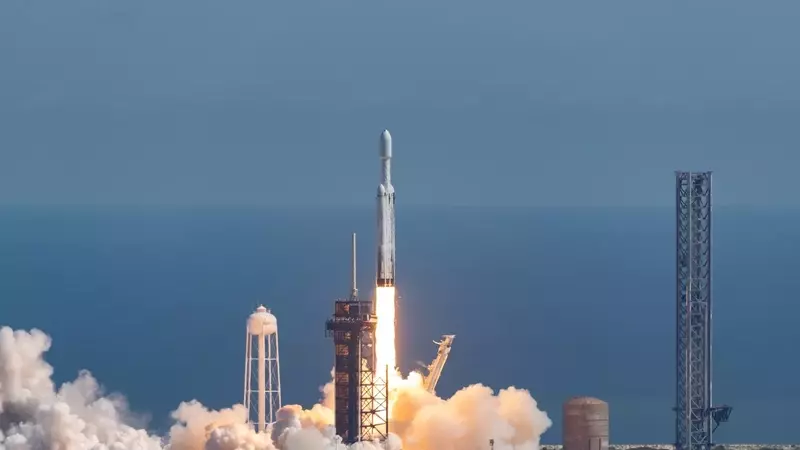
The latest acronym to emerge is MANGOS, representing Meta, Anthropic, Nvidia, Google (Alphabet), OpenAI, and SpaceX. This cohort signifies a profound transformation, breaking away from previous market conventions. A defining characteristic of MANGOS is that three of its members—Anthropic, OpenAI, and SpaceX—are currently private entities, with SpaceX anticipated to launch the largest IPO in history, aiming for a valuation of around $1.75 trillion. OpenAI has already submitted a confidential S-1 filing, while Anthropic's valuation is nearing $1 trillion after successful funding rounds. This indicates a historic convergence of artificial intelligence and advanced space technologies entering the public markets within a single year.
The Unprecedented Scale and Influence of MANGOS
The publicly traded components of MANGOS are already titans in their respective fields. Nvidia, with a market capitalization exceeding $5 trillion, dominates the GPU market, essential for powering cutting-edge AI models. Alphabet, valued at $4.37 trillion, recently secured a significant AI deal with SpaceX involving a massive deployment of Nvidia's GPUs. Meta, despite investor concerns over its substantial AI capital expenditure, maintains a market cap of nearly $1.5 trillion.
Distinguishing Features: Beyond Valuation and Traditional Metrics
What truly sets MANGOS apart from its predecessors, FAANG and the Magnificent Seven, is not merely their staggering valuations, but their fundamental structural differences. While FAANG thrived on consumer internet services and the Magnificent Seven expanded into cloud and EV sectors, MANGOS is anchored in AI infrastructure and the commercialization of space. These companies are not primarily consumer internet plays; instead, they are engaged in high-stakes competition for government contracts, leadership in advanced AI models, and dominance in low-Earth orbit. This represents a strategic shift towards frontier technologies and enterprise-level solutions.
Market Reallocation and Future Dominance
Analysts and traders observe a capital reallocation trend, with some attributing the recent volatility in Bitcoin and broader equity markets to investors positioning themselves for these impending, transformative IPOs. At its peak, the Magnificent Seven commanded approximately 40% of the Nasdaq-100's market capitalization. Should SpaceX, OpenAI, and Anthropic achieve their projected valuations, MANGOS could potentially control an equivalent or even larger share of the market, concentrated among just six entities. This concentration of power, innovation, and risk encapsulated within a single, potent acronym defines the current market narrative.