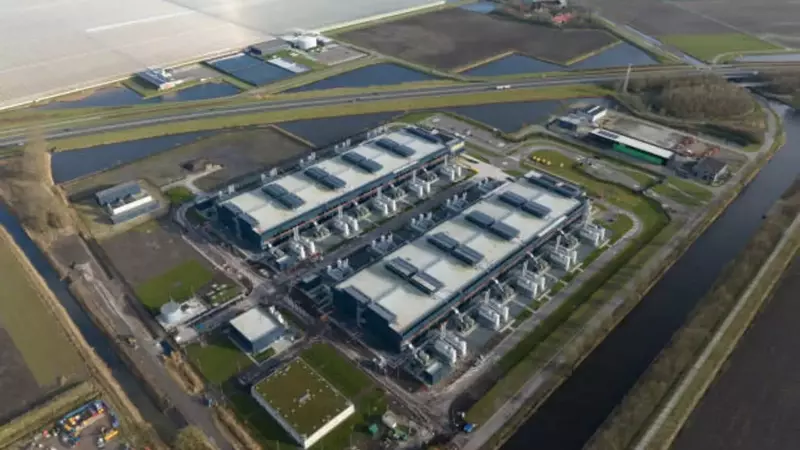

In response to the rapidly escalating costs and demand for computational power, particularly within the artificial intelligence sector, major financial institutions are venturing into the creation of compute futures markets. This innovative financial instrument aims to provide a mechanism for managing the risks associated with the fluctuating availability and pricing of computing resources. The increasing expenses are compelling enterprises to meticulously review and optimize their AI deployments.
Despite this advancement, a fundamental challenge remains for compute futures to establish long-term viability and attract substantial trading activity. The inherent nature of these costs, characterized by persistent upward trends rather than significant short-term fluctuations, may deter the sustained engagement necessary for a robust futures market. The effectiveness of these new derivatives will largely depend on their ability to address both the current economic pressures and the evolving needs of the AI industry.
Understanding the New Compute Futures Market
The Chicago Mercantile Exchange (CME), Intercontinental Exchange (ICE), and Architect Financial Technologies are pioneering the introduction of compute futures contracts. This strategic move is a direct consequence of the exponential growth in artificial intelligence capabilities, which has led to an unprecedented demand for computational resources. As AI becomes more integrated into various industries, the infrastructure required to support its processing power has become a critical and increasingly expensive component of business operations. These new futures contracts are designed to offer a hedging tool, allowing companies to lock in future compute prices and mitigate the financial risks associated with unpredictable market fluctuations in computational capacity. The goal is to bring greater stability and predictability to the procurement of these essential resources, fostering a more secure environment for AI development and deployment.
Currently, the primary concern within the AI industry regarding compute expenses is not their erratic behavior but rather their consistent and steep upward trajectory. This steady increase is largely attributed to the insatiable demand from AI applications, which continuously outpaces the supply growth of crucial components such as advanced semiconductors and data center infrastructure. The introduction of compute futures seeks to address this challenge by providing a forward-looking pricing mechanism. However, the sustained viability of these contracts hinges on their ability to attract consistent trading volume, which might be difficult if price movements remain predominantly directional rather than volatile. For these futures to truly flourish, they must offer sufficient incentives for active participation from a broad spectrum of market players, ranging from technology firms to speculative investors.
Navigating AI's Economic Impact and Cost Optimization
The substantial investment required for AI development, particularly in computational resources, inherently limits the potential for widespread job displacement. Economic principles suggest that the high costs associated with AI implementation will naturally restrict its application to areas where its benefits demonstrably outweigh the expenses. This market-driven equilibrium acts as a significant check on alarmist predictions of mass unemployment, ensuring that AI adoption proceeds at a pace dictated by economic feasibility rather than unchecked technological advancement. Consequently, while AI will undoubtedly reshape labor markets, it is unlikely to lead to the catastrophic job losses often portrayed in speculative scenarios, as businesses will carefully weigh the return on investment for each AI initiative.
As companies navigate the initial phases of AI adoption, many are encountering unexpectedly high compute costs, prompting a necessary reevaluation of their resource allocation strategies. This realization is pushing organizations to explore more efficient and economical approaches to utilizing computational power for their AI workloads. Rather than simply scaling up infrastructure, firms are now focusing on optimizing algorithms, refining data processing techniques, and selectively deploying AI solutions where they yield the highest value. This period of adjustment is fostering innovation in cost-management practices, encouraging the development of more sophisticated tools and methodologies to maximize efficiency and achieve sustainable growth in the AI domain.